To get more PMU clients, build a clear path from seeing your work to discussing a service and confirming an appointment. Show an accurately labeled portfolio, answer practical booking questions, and separate people seeking a treatment from people seeking training. Then measure where service inquiries stop moving forward.
For permanent makeup artists, a marketing plan needs more than attractive images and a contact form. It needs to help someone understand whose work they are seeing, what they are asking about, and what the next conversation will involve.
Separate service clients from training prospects
Send service and training inquiries to different pages and track them separately. Someone interested in having their brows done should not have to navigate course dates, certification language, or student enrollment forms to find appointment information.
Your service page should focus on the artist, service, portfolio, location, and consultation process. A training page should address the learning offer and its own verified details. If you offer both, make the distinction visible before the visitor submits an inquiry.
Give the forms separate labels: “Ask about a PMU appointment” and “Ask about training.” Do not add training leads to a report claiming to show demand for services.
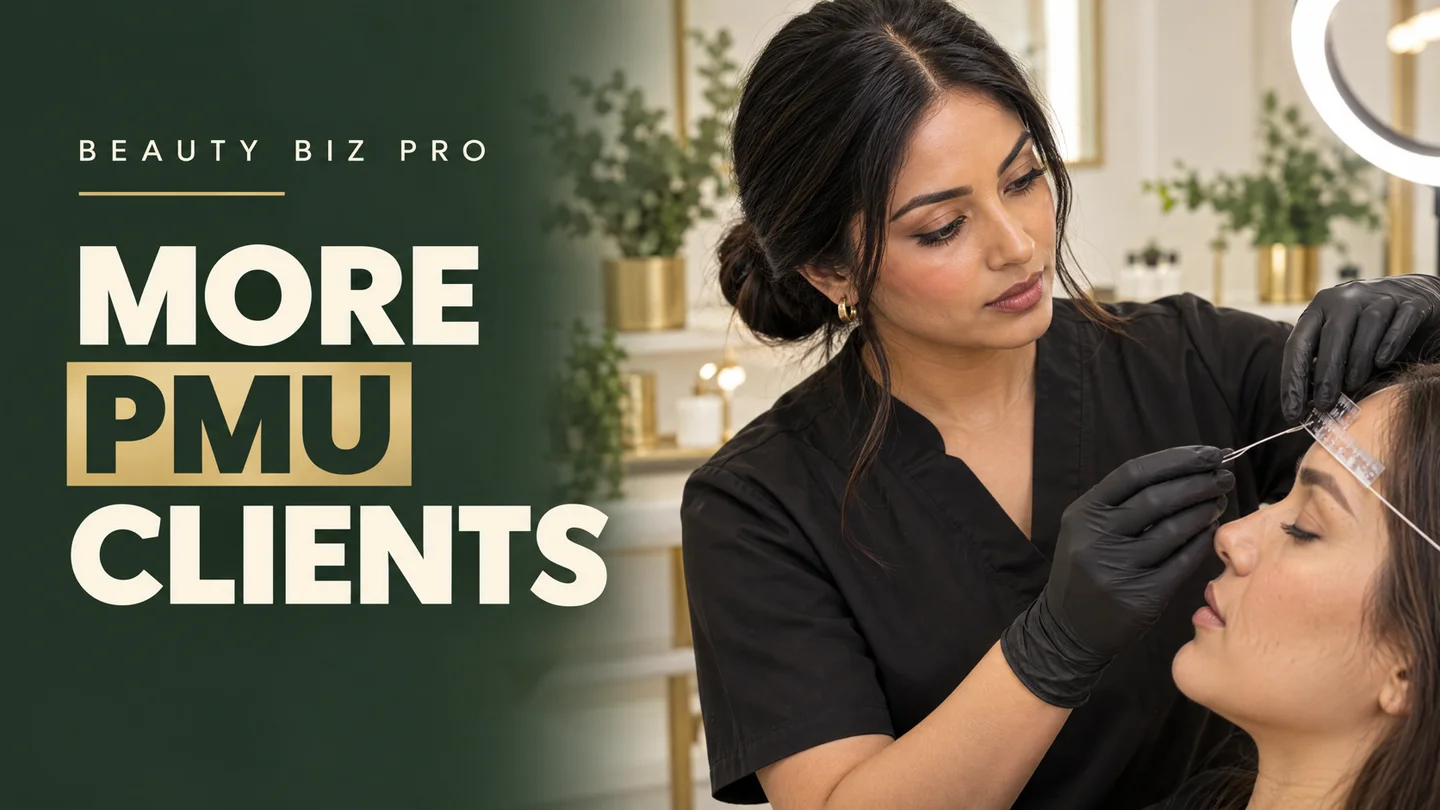
When reviewing marketing help, use PMU service marketing support as the relevant starting point and define the campaign’s audience explicitly.
Build a portfolio people can interpret
Label each example so someone can understand what it shows. A folder of attractive images becomes more useful when visitors can distinguish the service, artist, and stage of the work.
Use this portfolio audit before making an image the centerpiece of a page or ad:
| Check | What a complete example includes |
|---|---|
| Permission | Confirmation that this image may be used for the intended purpose |
| Service | A plain description of the service shown |
| Artist | The person who performed the work |
| Stage | An accurate fresh or healed label |
| Context | Relevant context approved by the artist, without personal information |
| Presentation | Images that accurately represent the work without misleading edits |
If an image is fresh, say so. If it is healed, confirm that description with the artist. Do not guess from the photo, and do not present a training demonstration or another artist’s work as your own client portfolio.
If you do not yet have suitable healed examples, describe the work you can substantiate and plan to collect approved follow-up images. Do not fill the gap with generated results or stock photos that look like client evidence.
Illustrative caption template:
[Service] by [artist]. [Accurately confirmed stage]. Shared with permission. This image shows this client’s work; individual outcomes vary.
Replace the fields with verified details. This is a caption structure, not a result claim or a recommendation about treatment.
Make your service page answer the booking questions
Explain the consultation process before asking someone to commit to it. A visitor should know whether they are submitting a question, requesting a consultation, or confirming an appointment.
Your page should answer:
- Which service and artist does this page cover?
- Where is the studio, and how does someone get there?
- Is the next step a conversation, a consultation request, or direct booking?
- What does your actual consultation process involve?
- How will the studio confirm the appointment and communicate its terms?
- Who answers individual suitability or treatment questions?
Keep suitability decisions and procedural advice with the qualified service professional. A marketing page or automated reply should not decide whether someone is a candidate from a short message.
Illustrative call to action:
Considering [service]? Request a consultation with [artist] to discuss your goals, ask questions, and understand the next steps. Sending this request does not confirm an appointment; our team will follow up with the available options.
Use this only if it matches your process. If your calendar confirms a consultation immediately, describe that instead.
Build local visibility around services you actually provide
Keep your business information consistent with the studio a client will visit. Check your website and Google Business Profile for current location details, hours, service descriptions, and working links.
Google identifies relevance, distance, and prominence as local ranking factors. Accurate profile information helps it understand the business, but no profile change guarantees a position in local results. Google’s local ranking guidance.
Invite honest reviews through a consistent process. Google does not allow incentives for reviews, selective requests for positive reviews, or attempts to dictate what a review should say. Google’s review policies.
An optional review request can be simple: “If you would like to share your experience with our studio, here is our review link.” Let clients choose their own words. Do not ask them to disclose personal information or make outcome claims for you.
Match each campaign to one next step
Give each campaign one clear purpose, such as a consultation request for a specific service. Mixing service bookings, training enrollment, model calls, and general brand awareness makes both the message and the reporting harder to evaluate.
Choose a service page and examples that match the campaign. An ad about one brow service should not send someone to an unrelated lip portfolio or a course application.
For paid media, compare channel fit using your available creative, local demand, appointment capacity, and ability to handle inquiries. Read the Facebook versus Google Ads guide before assuming one channel is always cheaper or better for PMU.
If inquiries are already coming in, improving the consultation journey may be the next useful investment. More traffic is not the only way to improve results.
Follow up without pretending a question is a commitment
Respond to the person’s actual question and clarify the next step. A portfolio inquiry, a request for availability, and a question needing an artist’s judgment should not all receive the same automated booking message.
Illustrative reply to a general inquiry:
Thanks for asking about [service]. You can see [artist]’s labeled portfolio here: [link]. Would you like help requesting a consultation, or is there a question you would like us to pass to the artist first?
Decide who handles each type of reply and how unanswered conversations are reviewed. If automation is involved, define the point at which a person takes over. AI receptionist support can be evaluated for general inquiries and scheduling, with capabilities and boundaries verified for your actual setup.
Track the consultation journey with dates
Record each stage separately so you can find the gap instead of guessing. Use a simple worksheet with one row per prospective service client, and attach repeat messages to that row:
| Field | What to record |
|---|---|
| Source and service | Where the person came from and what they asked about |
| Inquiry date | When the inquiry arrived |
| Next action | Question answered, artist review, or consultation offered |
| Consultation | Requested, confirmed, and attended dates where applicable |
| Service appointment | Confirmed and attended dates where applicable |
| Current status | Waiting, proceeding, declined, or no response; note canceled, rescheduled, or missed appointments separately |
Review inquiries from the same period and allow time for later appointments to happen. A consultation booked this week may not be attended this week. Dividing unrelated weekly totals can give a misleading conversion rate.
If your process allows direct service bookings, mark the consultation stage as not applicable. Do not count that successful route as a lost consultation or label an upcoming appointment as missed.
Use the lead conversion diagnostic when one stage appears to stall. Start by checking the message, page, and handoff at that stage rather than labeling every inquiry low quality.
Download the PMU consultation and portfolio checklist and audit one service journey from beginning to end. If the wider bottleneck is unclear, take the growth assessment before adding more campaigns.